________________
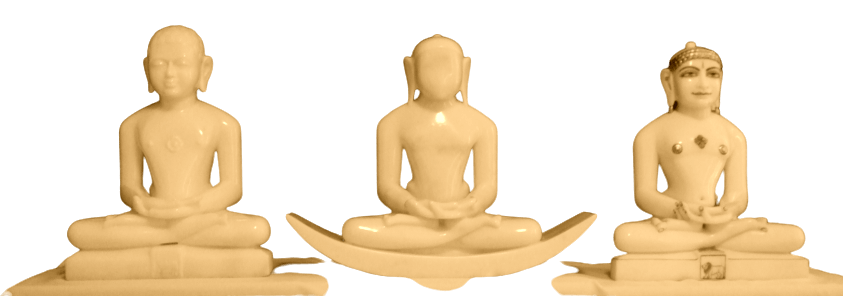
Śrāvikā (male-female householders) who uphold these dharmas is known as dharmatirtha'.Tirthaṁkaras having renounced the worldly attachment achieve spiritual excellence by engaging themselves in uninterrupted spiritual exercise, and thereby obtain unveiled omniscience and then having compassion on all the sufferings living being (vas) teach them dharma for their benefit.
In Jainism mokṣamārga itself is known as tīrtha and Tirthamkaras are the torchbearer of this path. According to Jainism satya itself is tīrtha; kṣamā (foregiveness) and indriyanigraha (sense-control) are also tirtha. Compassion for all livings, simplicity, donation, containment, chastity, loving speaking. knowledge, patience and good work- all these are acclaimed as tīrtha. Further to Jainas krodha (anger), māna (prestige), māyā (delusion), lobha (greed) are considered passions they are nothing but ignorance and those who have completely discarded all of these passions are called tirtha.Caturvidha saṁgha is the aspirant of mokṣamarga and itself is considered tirtha; establisher of this samgha is called as Tīrthamkara. Tīrthamkaras obtain omniscience and then having compassion they start preaching dharma for all sufferers for their benefit. Samantabhadra admiring Tirthamkara Mahāvīra and said- 'O Lord! Your's this tirtha is sarvodaya or welfare to all.
Everything concerned with Tirthamkaras is more or less in its first instance is look more spiritual rather than intend to obtain material welfare that is essential for societal growth in practical. Further it also looks like to foster self-centered attitude and would be charged that the concept of Tirthaṁkaras of Jainism does not concerned with the society and it lacks of social element and cannot be relevant for modern society to maintain the sense of social consciousness for contemporary issues. Irrespective of this, it is very much established that all the Tirthamkaras did lead a social life and did attain salvation at the end and the path shown by the Tirthamkaras has enough potency to take pains to provide for the welfare of both the society and the individual and is always relevant irrespective of time and space.
Jainism, Ethics & Social Consciousness
Ethics is part and parcel of social life. Ethical elements of Jainism are quite humanistic and have much amount of social consciousness for contemporary issues. Inspite of that a charge is generally laid against the system of Jaina ethics to the effect that it fosters the self-centered attitude, and does not care of the society and therefore social element in Jaina ethics is not strong. It is true that the main aim of Jainism is to attain freedom from the transmigration of soul and the whole Jaina ethics has been based on this foundation. All rules of conduct are so designed as to secure the aim as early as possible. As there is no outside agency to help the individual in his efforts to secure salvation, it is natural that
Arhat Vacana, 23 (1-2), 2011
74