________________
more importance was given to the individual but this does not mean that ethics was confined to individual alone. On the contrary, the ethical code was evolved for the whole society?
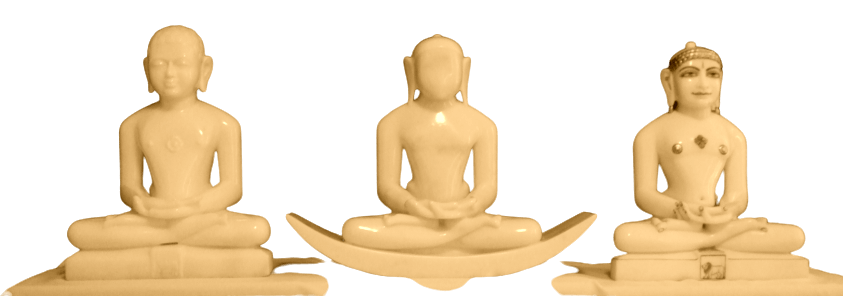
Jaina ethics took pains to provide for the welfare of both the society and the individual. It recognized the need for taking care of the society, and also aspired to bring the highest conceivable form of good within the individual reach. The social aspect of individual's life was never ignored. An individual was never conceived as separated from the society and social life. He was enjoined to achieve his goal while leading the worldly life, which necessarily involves relations with other members of the society. All the Tirthamkaras, whom the Jainas adorned, did lead a social life and did attain salvation at the end. It is very much cleared for Jainas that social life was never considered as an impediment to one's spiritual progress if necessary precautions are taken.
Vows are the special feature of Jaina ethics and are separate for monks and householders. Monks of course are the symbol of spirituality but householders are not like that especially for explaining the social consciousness. Householders are lay votary and the numbers of vows of householders are twelve- 5 anuvratas (ahimsā, satya, asteya, brahmcarya and aparigraha; 4sikşāvrata (sāmāyiks, prosadhopavāsa, upabhogapribhogaparimāņa and atithisamvibhāga) and 3 gunavratas (digvrata, deśavrata and anarthadanda vrata). Anuvratas are the basic vows and the rest other seven vratas collectively called as supplementary vows or śīlavratas. Sikşāvratas are disciplinary vows, because they are preparatory for the discipline of ascetic. Gunavratas are multiplicative and they raise the value of the five main vows. These vows play a good part in the life of a single Jaina as well as that of the whole community.
Jaina ethical rules are meant for men of all positions for kings, warriors, traders, artisans, agriculturists, and indeed for men and women in every walk of life. Do your duty and do it as humanely as you can- this, in brief, is the primary principle of Jainism'.It is evident that social element in Jaina ethics is not neglected.. Further, Jaina ethics includes the negative as well as positive rules of conduct. These prescribed rules of conduct limited for practicing within the members of Jaina community. Jaina ethics embraces not only followers of Jainism but in a true sense all living beings. It is obvious that Jaina ethics tries to regulate the mutual relations of human beings and for that purpose vows and other activities are laid down. Among them the five main vows are more important from the point of social relations. Jaina ethics solves the individual problem of attaining spiritual merit and at the same time shows the way of solving all outstanding social and world problems.
Arhat Vacana, 23 (1-2), 2011