________________
ARHAT VACANA Kundakunda Jñanapitha, Indorey
Vol.-23, Issue 1-2, January-June 2011, 73-81 Jainism, Social Consciousness and Contemporary Issues ■Rajjan Kumar*
Abstract
Modern societies are increasingly becoming socially unstable. There is no love between ethnic communities, religious groups, socially advanced and socially backward groups, husband and wife, parents and children. Groups and individuals are guided by narrow selfinterests. Due to these modern social evils communities as well as families are affected. Peace, love, harmony, joy and mutual concerns are almost disappear or at the verge of vanishing. These are exciting times for Jainism to project them as a true religionist with having ample amount of social conscience. Jaina way of life was prone to ascetic' is gone. Today, it can provide a very positive, meaningful and practical solution for contemporary issues.
Introduction
Religion has always been a matter of discussion and dispute. To keep social consciousness is the key factor of every religion. Because the basic purpose of all religions to ensure peace and happiness for the individual and to establish harmony within human society. Jainism, one of the prominent religion of world by mistaken has been projected as an ascetic based religion, and is quite difficult to justify its relevancy and practicability for modern society. Jainism, Tīrthamkaras & Social Consciousness
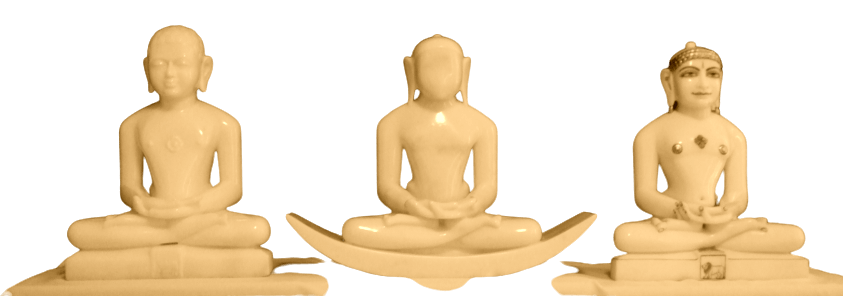
The word 'Tirthamkara' of Jainism is ancient and technical. There are 24 Tirthamkaras. Tirthamkaras of Jainas have the same place as God in other religion, however they are neither considered an incarnation of God nor regarded as a strange fellow in the divine creation. But Tīrthamkaras are emancipated soul and that is why considered like a God'. Tirthamkara did excellent penance and religiously followed the path of self-control. With the utter purity of feeling he pursued with diligence and rigorous exercise known as Tīrthamkara-nama karma anubhāgabandha and only then did he became a Tīrthamkara2.
Tirthamkaras are known as the establisher of Dharm-tirtha, which is called as way way of religion. In Jainism concept of tirtha may be explained as shore beyond the ocean. In Jainism non-violence (ahimsa), truth (satya), non-stealing (asteya), chastity (brahmcarya) and non-possession (aparigraha) are dharma and fourfold collectivity (caturvidhasamgha)- Śramaṇa-Śramaṇī and Śrāvaka
* Reader & Head, Department of Applied Philosophy, M.J.P. Rohilkhand University, Bareilly-243006 UP