________________
a woman with the hairdo, neck ornaments and ear ornaments as being used today by the Bonda or Gadava women. This would indicate the littoral tribal habitation from which the model was selected by sculptor.
The tribals of Orissa can be divided into two groups - the proto - Australoid and the Proto Dravidian. Most of the tribes living in Koraputa area are Proto - Dravidian.Totemism is prevalent among the tribals. In Proto - Dravidian worship, father and mother goddess play important roles. The names vary from tribe to tribe. Sometimes these gods are called Dhavnipenu,Jhankara Devta, Dhartimātā, Bara Deo, Badliyāpen Danger Devi etc.
The tribal pantheon mostly consists of the supreme sun god, mother earth, presiding deities, nature spirits, ancestral spirits and the village tutelary.
Each tribe living in Koraputa has its own peculiar religious customs, dress, social organisation and language, either inherited or acquired through cultural cross-currents. . Inspites of these cultural cross-currents, the predominant tribes never believe in heaven' and'heil' reward of punishment during the life-time for moral or immoral acts. They believe in re-incarnation and transmigration of soul which is very naive in character.
In this background, the Koraputa tribal religion consists of life crises rites, cyclic group rites, ancestral and totemic rites and occult practices.
The whole of Koraputa and part of Kalahandi was formerly known as Mahakantara and was subjugated by the Gupta Kings. Later, the Matsyas ruled over a portion of the area followed by the Shilas. Shilas were part of the Eastern Ganges and they ruled over this area for about 4 to 5 hundred years. The Shilas were Saivites. The Shila Kingdom with its capital at Nandapur was conquered by the Chindaka Nagas of Cakrakuta some time in the 12th Century A.D.. Cakrakata is the modern Bastar whose capital was at Barsur and later shifted to Bastar. The Chindaka Nāgas were of Naga origin and of unknown identity. In order to strengthen their eastward expansion, the Chindaka Nāgas negotiated a matrimonial alliance with the Kakatiyas of Warangal. The Kakatiyas were sudras and patronized Jainism. With this alliance, Jainism came to Bastar. Bastar is mostly inhabited by the Mārias, Murias, Abujhamārias, Gonds and Koyās.
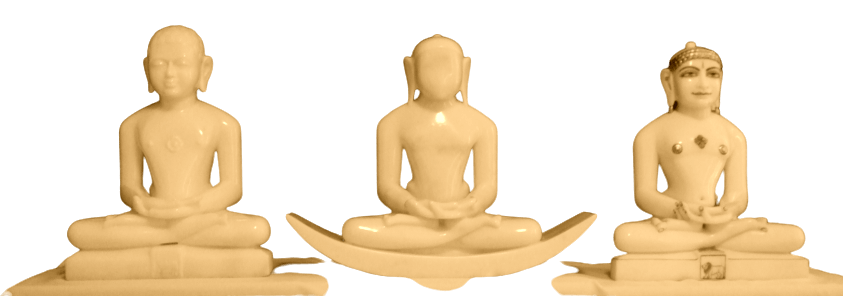
With expansion of the Chindaka Naga Kingdom towards the east, the influence of Jainism came to Koraputa area. Jaina idols were enshrined at Deorli which is on the bank of river Jannāra, at Jamunda on the bank of a tributary of river kolava and Jaypur on the bank of river Kolava, Mali Mountains are in the middle of Koraputa District. One river named Molan starts from the western side of Mali mountains and meets Indravatt river after a forty
50
Arhat Vacana, January 99