________________
Vol. XVII, No. 2
25
philosophers like Kumārılabhatt and Prabhākar Miśra do not accept the God as the creator because they believe that the world is beginningless. The Jaina and the Mimārsakas have put forward similar arguments about the denial of the God as the creator of the world. 20 In the works of the early Vaišesikas there is also the denial of concept of the God. In the Yogasūtra of Patañjali and Nyāyasūtra of Gautama the God has been visualised as an ascetic (Yogi), free from the eighteen defects and blemishes (Apta), and omniscient (Sarvajña) etc. In Jaina philosophy also a liberated soul is regarded as Paramātmā, Āpta, Sarvajña etc. Thus after a close scrutiny of the beliefs of different philosophers of Jainism and Hinduism about ultimate reality it transpires that all of them have expressed almost equivalent views.
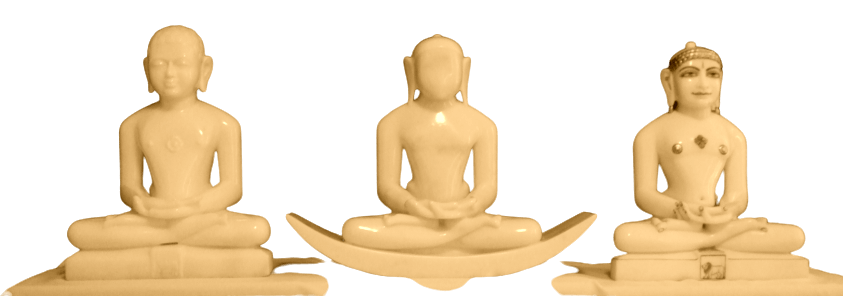
Though Jaina religion negates the existence of God who causes creation and destruction, still Jaina ethics accept the existence of that pure form of soul which has become enlightened because of its excellent qualities. Jaina religion has recognised a number of such enlightened souls who have experienced infinite joy and who have become free from this world. Such enlightened souls have been called 'Arhat and 'Siddha'. They have realized the real form of self by winning over senses. Dr. D.N. Bhargava rightly observes that “These Siddhas are far more above gods or deities. They neither create nor destroy any thing. They have conquered, once for all, their nescience and passions and can not be molested by them.21 These Arhats and Sidhas are also known as Āpta (free from the eighteen kinds of defects and blemishes), Saryajña (an omniscient being), Vītarăgi (free from passions), Kevali (attained highest knowledge), Paramātmā (the highest soul), Parameșthin (The supreme divinity) etc. Jaina ethics has the provision of worshipping such Arhats and Siddhas but from them no material is desired. They are worshipped for attaining their spiritual qualities for which the worshipper has to do penance himself.22 A person's feelings get purified gradually from this worship. It purifies his actions continually.
The self of man is under a gradual process of development. There are three kinds of souls according to Jaina ethics.23 (1) Outer-self (Bahirātman)--it remains involved in wordly affairs taking body to be the soul. (ii) inner-self (Antarātman)--it understands the difference between body and soul and tries to attain the form of soul leaving the attachment of the body and (iii) enlightened soul (Param itman)-it has known and realized the real form of soul. It is full of infinite knowledge and joy. Ācārya Kundakunda, a Jaina philosopher, had advocated this view first of all and it was developed by other Jaina thinkers. 24 In Hinduism also the nature of the development of the soul
Jain Education International
For Private & Personal Use Only
www.jainelibrary.org