________________
124
Jain Thought and Culture
Ramagupta devoted images to the faith, yet with the rise of Vaisnavism and Buddhism, Jainism suffered a set back in this period In the post-Gupta period again, Jain activities shifted from north India to Rajputana, Gujarat, and Central India
76
Thirdly, Kusana and post-Kusana Jain inscriptions of Mathura throw an important light on the contemporary followers, acaryas, and nature and function of the Jain faith It had a large following not only among the trading class but a large number of followers also came from the lower classes such as treasurers, perfumers, metal workers, members of gosthis, village-headmen, wives of caravanleaders, merchants, wives of dancers, goldsmiths, and also courtesans The mention of various ganas, kulas and shakhas reveals the well organised system of the faith Independently, it may be an interesting study in itself
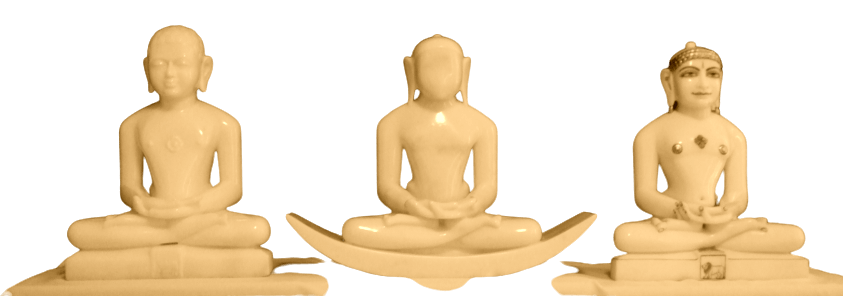
Fourthly, as regard the origin of image and image-worship in Jainism, although it is difficult to fix a definite date for the beginning of image worship in Jain religion, yet Lohanipur torso could be treated as the earliest Tirthankara image (in Kayotsarga posture) belonging to the Mauryan period The earliest seated image of a Tirathankara in relief appeared on an ayagapatta dated to the Kusana period The earliest independent sculptures of the seated Tirthankaras were carved by the Mathura artists at the beginning of the Christian era
In the beginning, the iconographical features (cognizance) of 24 tirathankaras were not fixed Apart from two common featuresnackedness and srivatsa symbol on the chest-it was impossible to identify the Tirathankaras except for Parsavanath and Rishabhadeva who could be identified by a canopy of snake-hoods and locks of hair falling on their shoulders respectively In the Gupta period, on the one hand, certain iconographical features were introduced in the Jain images such as mahapurusa-laksanas and chakravati elements particularly in the images of Mahavira and on the other hand some of the gods from the Folk and Hindu religion-Yaksa, Yaksı, Vyantara devata, Shasanadevatas, Laksmi etc, were accepted in the Jain pantheon, although their representation through images is a compara
76 In this connection mention may be made of a quarrel between Jainas and Budhists over a stupa See, Vyavahara Bhasya, 5, 27, 28, Vividhakalpa sutra of Jinaprabha (ed) Jinavijaya Shantiniketan, 1934, pp 1718